
Before anyone measures the house
How can I tell if my house is slab or pier and beam?
Walk around the outside and look at the bottom of the walls. Concrete showing under the brick or siding, a few inches above the dirt, means a slab. Vents or a skirting around the base, an access door somewhere along it, and a couple of steps up to the front door mean a crawl space, so pier and beam. Plenty of older Tyler and Longview houses are the second kind, and pier and beam repair works differently from slab work.
I just noticed a new crack. What should I do today?
Get a pencil. Mark both ends of the crack, write the date beside it, and take a photo with a tape measure in the frame. Then go outside on that side of the house and look for the obvious: a downspout pouring onto the slab, a sprinkler hitting the wall, dirt sloping toward the brick.
After that, wait a few weeks and look again. A crack that stays inside its marks while the doors around it keep closing is usually telling you very little. One that runs past the marks, or shows up with a door that has started to hang, is worth getting readings for. Reading foundation cracks shows which shapes matter.
Why do so many companies offer free inspections?
The visit is also a sales call. Whoever takes the readings is often paid partly on what gets sold, and a house that needs nothing earns nobody anything. That doesn't make the readings wrong. It does mean you should ask to see them, ask what caused the movement, and ask out loud whether drainage alone could fix it. The guide on choosing a repair company has the rest of the questions.
My house is less than 10 years old. Who pays?
Check your builder paperwork before you call anyone else. Texas hasn't required a new-home structural warranty since 2009, so any 10-year coverage you have came from the builder's contract or a third-party warranty company. If you have it, a claim there costs far less than paying a contractor yourself. Keep dated photos and pencil marks from the day you first notice something, since the warranty company will ask when it started.
Who actually does the repair when I contact Sabine Valley?
An independent local foundation specialist. We pass your request along, and the specialist calls you to set up the visit. They measure the house, explain what they find and put any repair in writing before work starts. How it works lays out each step.
What the work itself involves
How long from the first call to a finished repair?
Think in weeks. The inspection, a written plan, the permit and the Texas 811 notice, which has to go in at least 48 hours before anyone digs, all come before a crew arrives. Then the work itself is usually a few days, and the drywall should wait weeks to months after that. The day-by-day walkthrough of a repair covers each stage in order.
What's the difference between stabilizing and leveling?
Stabilizing stops the house from moving further, usually with piers that reach soil below the layer that swells and shrinks. Leveling lifts the low parts back toward where they were built. Most repairs do both. An older house is sometimes better off stabilized and lifted only part of the way, since forcing 70-year-old framing back to flat can crack more than it fixes. House leveling goes into how far a lift should go.
Can foundation repair cause more damage?
Some, yes, and a straight contractor tells you so up front. Lifting a house moves everything attached to it. Expect a few new drywall cracks, gaps at trim, a door or two to adjust, and some grout lines in tile near the piers. Below the floor, a lift can pull apart a weak plumbing joint, which is why the drains get tested before and after, and the water supply and gas connection deserve a check too.
Broken windows, cracked brick running up a whole wall, or tile popping across a room are a different matter. Those usually mean the house was pushed too far, too fast. The Texas engineering guidelines say plainly that how far to lift is a judgment call made to limit damage, not a race to dead level.
Is a foundation job site dangerous for kids and pets?
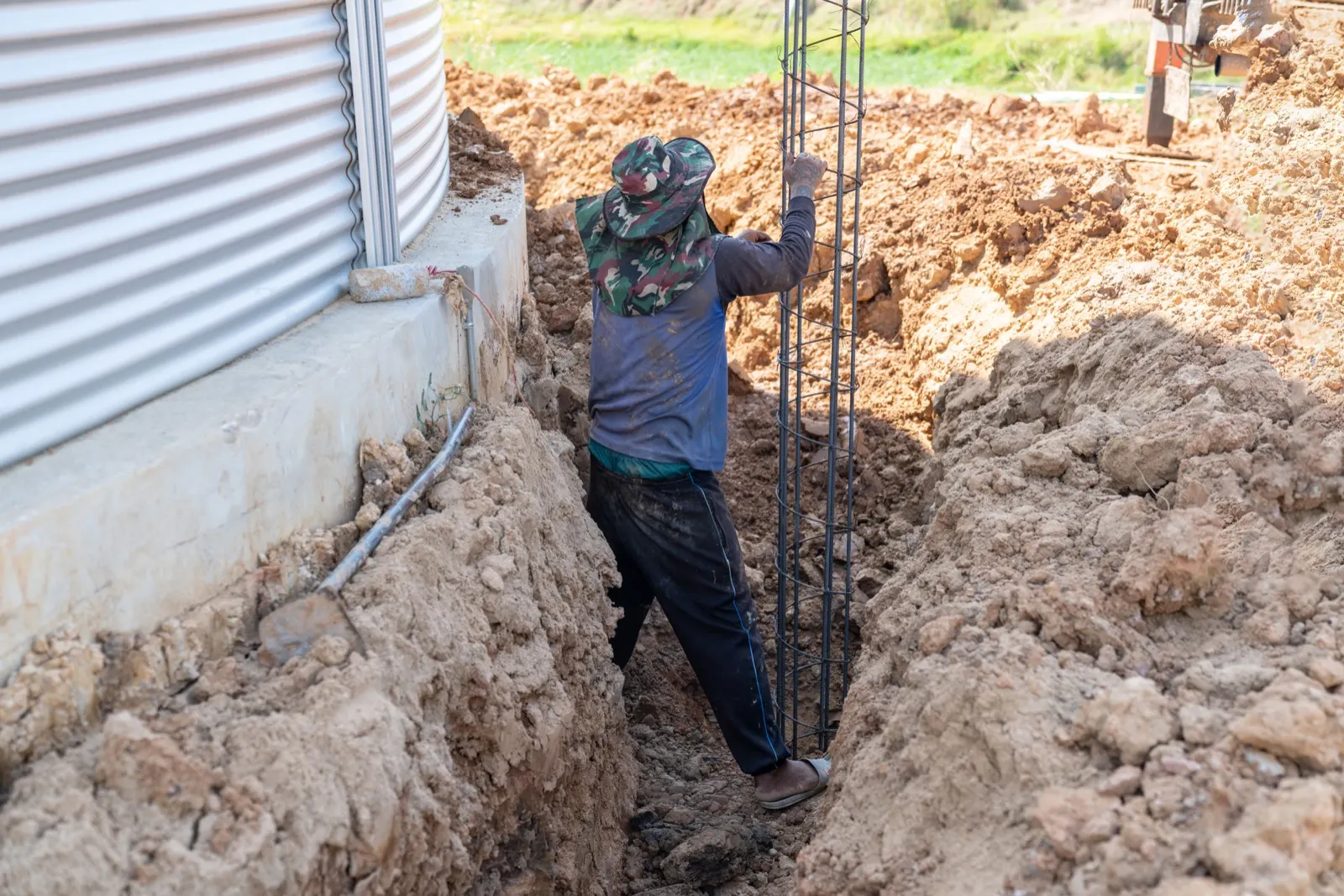
Mostly the holes. A pier hole beside the slab is about 2 feet square and deep enough to hurt a child or a dog who falls in, and it can often stay open for a day or two. Keep children and pets inside or away from that side of the house while crews are working, and walk the yard each evening to see that open holes are covered.
Who calls 811 before the crew digs?
Usually the contractor, but confirm it, because Texas law has no homeowner exemption for digging 16 inches or deeper with powered equipment. The flags only mark the utility companies' lines. Your sewer line, sprinkler pipes and any private gas or water line won't be marked, so show the crew where they run.
After the crew has gone
How do I know the repair worked?
Start with numbers. Compare the floor readings taken after the lift with the ones from before; the low side should have come up close to what the plan called for. Then let the seasons do the testing. Watch through one hot, dry summer and one wet spring. Pencil marks that hold still and doors that keep closing are your proof. If you'd like a sense of what a normal amount of slope is, how much movement is too much walks through the guideline engineers use.
Is foundation repair permanent?
The piers are meant to be. Installed to proper depth and kept out of standing water, they're built to last as long as the house does. But the house isn't one pier. The parts the plan didn't reach are still sitting on the same clay, and the Texas engineers' guidelines say outright that underpinning doesn't improve the areas it leaves out. So a repair holds for as long as the water around the house stays under control. Most of the settling after a repair typically happens within about two years once that water is fixed. A house that keeps moving after that usually has a leak, a drainage problem or a thirsty tree working on a wall without piers.
Is foundation repair tax deductible?
Not on the home you live in, in most cases. IRS Publication 530 lists repairs to your home as nondeductible and says they generally don't add to your cost basis either. The exception is repair work done as part of a larger remodel or restoration, which counts as an improvement. Rental property follows different rules. Keep the invoice either way and ask a tax preparer how your job fits.
What paperwork should I keep?
One folder, with the floor readings from before and after, both plumbing tests, the permit, the invoice listing every pier and its depth, and the warranty. If an engineer designed the repair, add the after-survey and any letter saying the work matches the plan. That folder is the first thing a buyer's inspector and lender will ask for, so keep it with your closing papers.
Selling a house that's had a repair
Do I have to tell a buyer about a past repair?
Plan on it. The Texas seller's disclosure notice asks about known defects in the foundation and about previous structural repairs. A documented repair with a warranty worries most buyers less than a sloping floor with no explanation. Your agent can help with the exact wording on the form.
How does a warranty transfer to the new owner?
Read the warranty for three things: does it transfer at all, is there a fee, and how long after closing do you have to file the paperwork? Some have a short window. Do it before you list, and hand the buyer the transfer form along with the folder. A lifetime warranty that lapsed because nobody mailed a form is worth nothing at the next owner's kitchen table.
Can I get a second opinion after I have a quote?
Yes, and on a big job you should. Give the second company the first one's readings and plan, so they can say where they agree and where they don't. If the two land far apart on pier count, an engineer's plan settles it, and whether you need a structural engineer explains when that's money well spent.
Ask us the one that isn't here
Most questions about a house come with details no list can cover: the crack over the back door, the quote with 22 piers, the closing date in five weeks. Those are easier to answer on the phone, and a call costs you nothing.
Call (903) 522-4592 and ask it straight. If the answer depends on measurements, a local specialist can come out and take them. Would rather write it down? Put the question in the request form and someone will ring you back.
 Prefer our guides in Google results
Sabine Valley Foundation Repair is paid by the independent foundation specialists it introduces homeowners to. That never changes the advice we give. How we're paid