One sign is a clue, three in one corner are a story
Most people who call us start with a list. The back bedroom door catches at the top now. There's a crack over the closet that wasn't there at Easter. Somebody noticed a jagged line in the brick out by the AC unit. People tend to search each of those on its own, and they come away either scared or convinced it's nothing.
Put them on a sketch of the floor plan instead. If the rubbing door, the closet crack, a gap under the baseboard on the outside wall and the stair-step in the brick all sit within a few steps of the same back corner, they agree with each other. Four small things, one explanation: that corner dropped. Scatter the same four signs around the house with nothing in common and you're more likely looking at a house that has aged, dried out and been painted a few times.
It takes less movement than people expect. A quarter inch of settlement under one corner can crack drywall and brick.
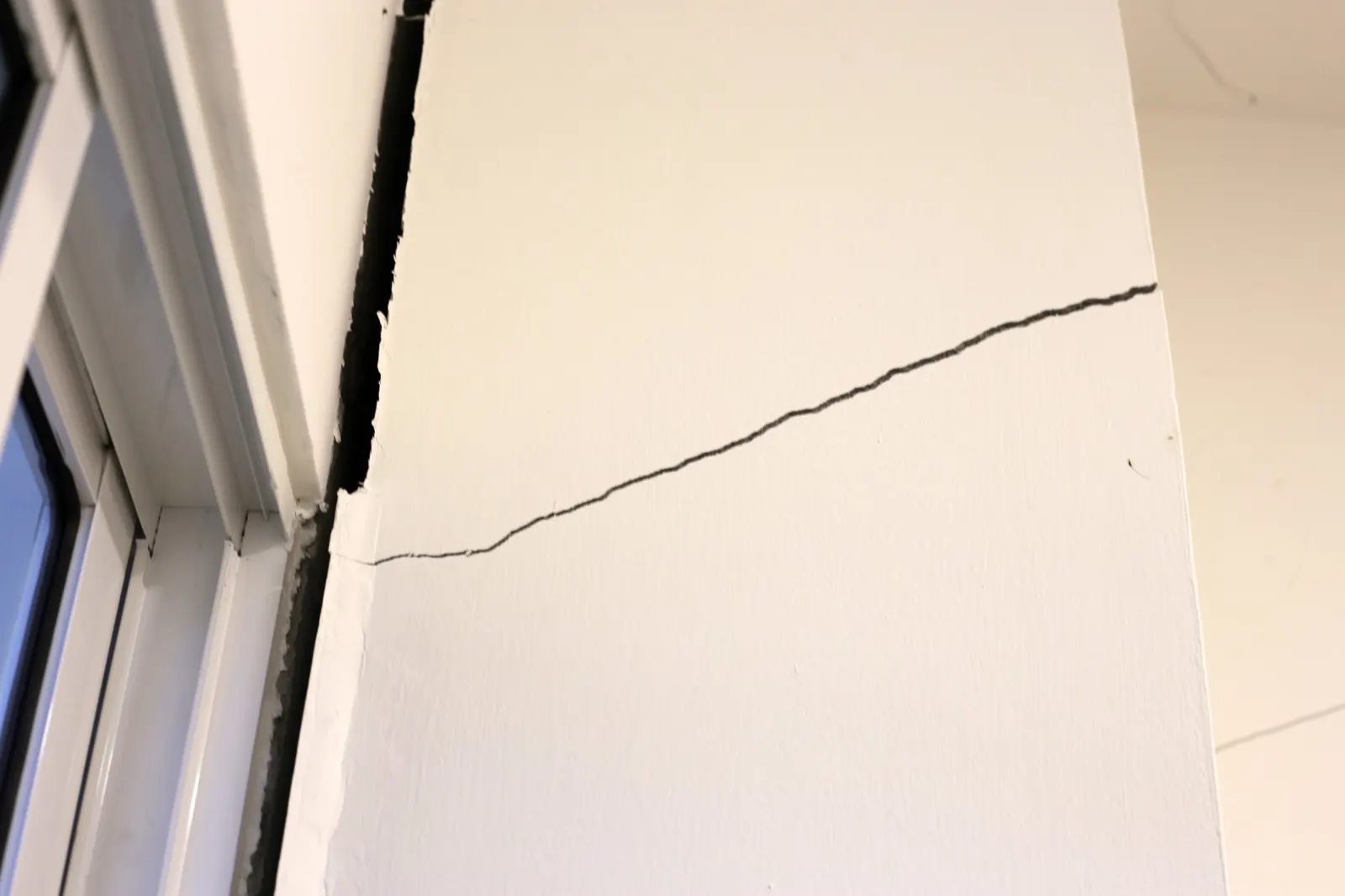
Cracks also exaggerate as they climb. The wall above a door is where the strain collects, so the crack over the frame often looks twice as wide as anything near the floor, and a wide crack up high doesn't mean the house fell inches.
What the inside of the house is telling you
Walk it slowly with a notepad, one room at a time, and mark each sign on your sketch. Where a sign sits matters more than what it is.
| What you see | What it usually means | How much to worry |
|---|---|---|
| A door that rubs at the top corner or won't latch | The frame has racked out of square because one side of the wall dropped or rose. | Low on its own. Higher when doors in the same area all change. |
| A door that swings open or shut by itself | The wall it hangs on now leans a little toward the low side. | Low, unless it's new. Note which way it swings. |
| Diagonal crack from the corner of a door or window | Movement is concentrating at the weakest point in the wall. | Medium. Mark it and watch it through a season. |
| Gap under baseboards or crown molding opening at a corner | Floor and ceiling have moved apart or out of line. | Medium when it lines up with cracks nearby. |
| Cracked tile in a straight line across a room | The slab under it cracked or bent and took the tile along. | Medium to high. Tile can't hide a slab crack. |
| Cabinets or countertop pulling away from the wall | The wall or the floor under the cabinet moved. | High when the gap keeps widening. |
| One hairline crack at a drywall seam | Tape and mud letting go, or framing drying out. | Low. Patch it and move on. |
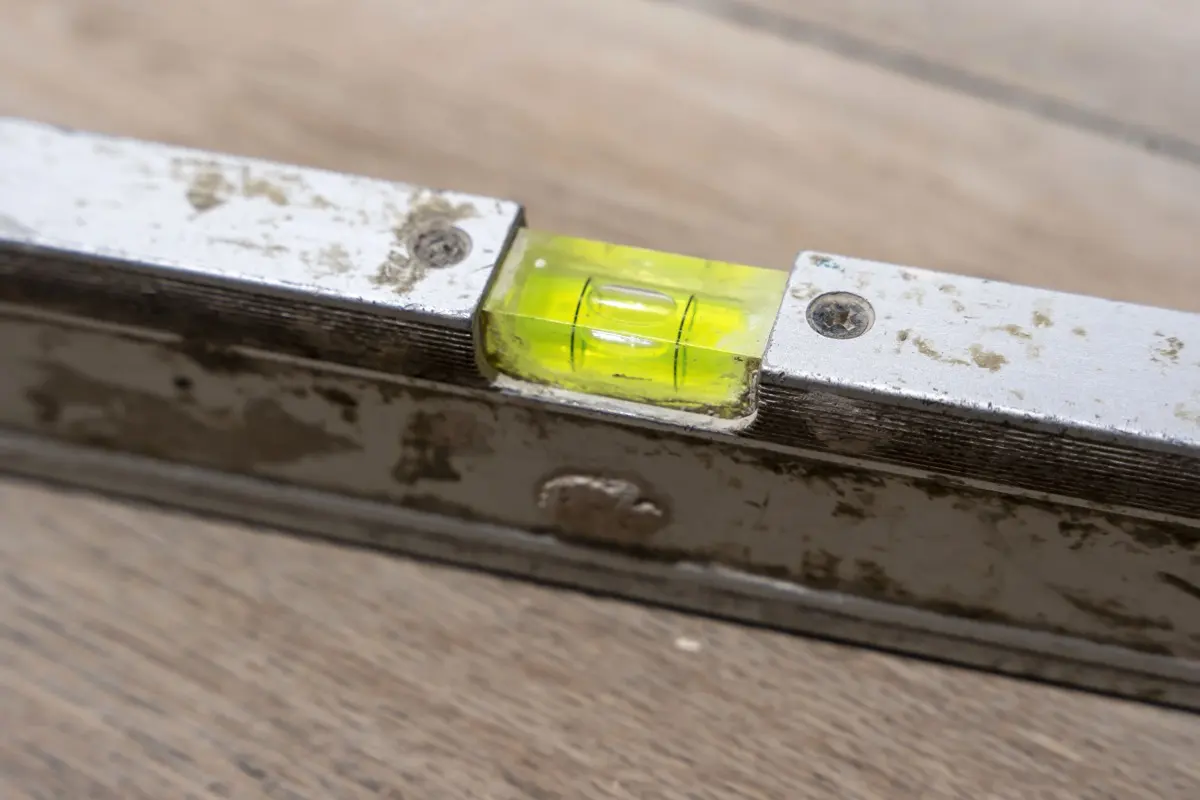
Doors are the most sensitive gauge in the house. Close each one slowly and watch where it catches, then look at the gap around it: is it even, or wider at the top on one side? Write it down. When three doors in one wing all bind the same way, they're pointing at the same low spot, and you found it without a level.
Furniture gives it away too. In older houses people slide folded cardboard under a rocking piano or a china cabinet whose doors drift open, and they do it so long it stops registering. If you've had to prop the same piece twice in a year, the floor under it is still changing.
Outside the house and underneath it
Brick shows movement better than anything inside, because every mortar joint is a straight line to begin with. Walk all the way around in daylight and look for these:
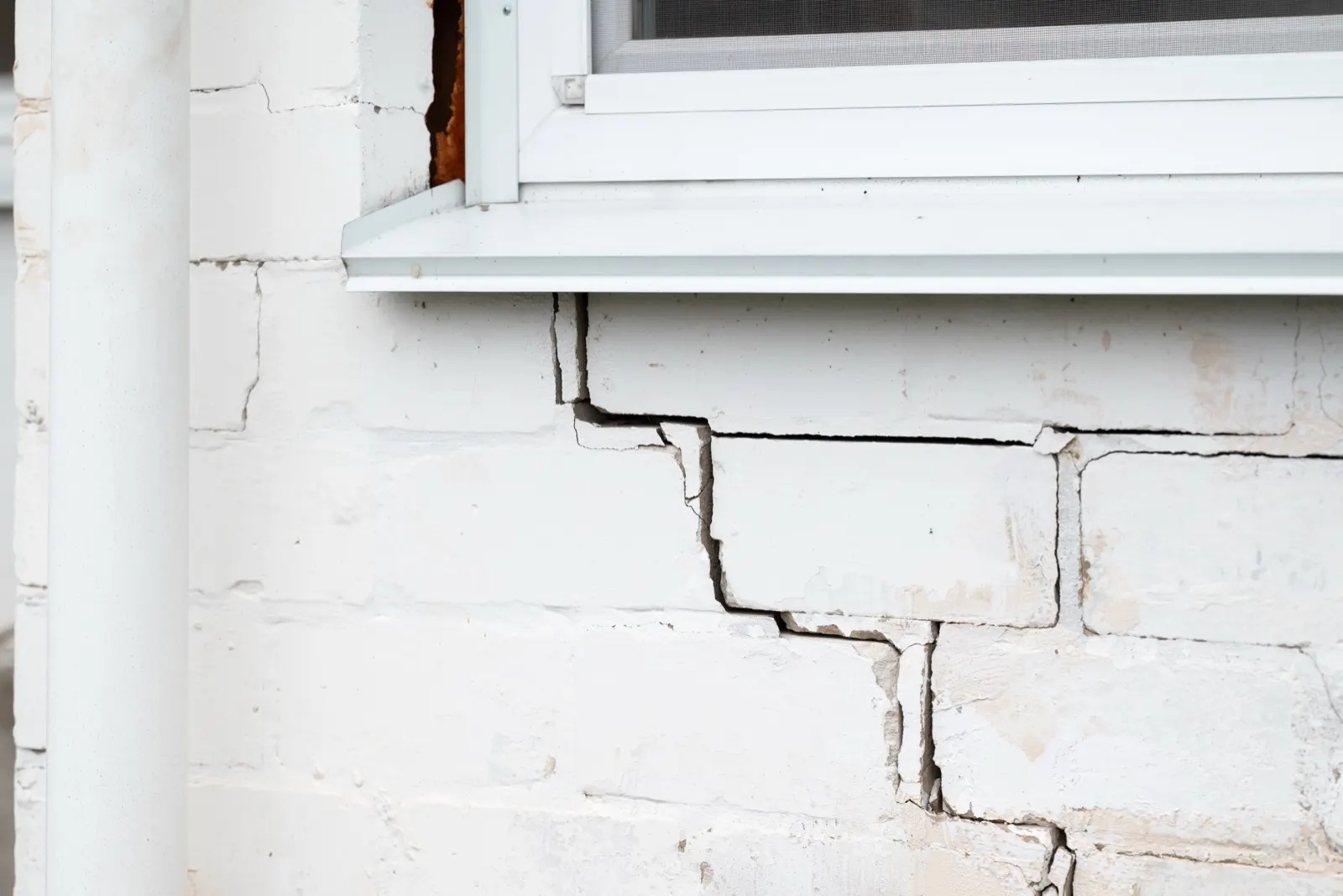
- Stair-step cracks in the brick. They follow the mortar up or down from a corner or a window. Check whether the brick on one side sits lower or further out than the other. That offset tells you more than the length of the crack.
- Gaps at window frames and the garage door. A gap between brick and frame that's wider at the top than the bottom means the wall is leaning or the corner has dropped.
- Inside and outside cracks that line up. When the stair-step in the brick sits right behind the bedroom drywall crack, you're almost certainly looking at one movement from two sides.
- Water where it shouldn't be. Downspouts emptying at the slab, a bed that slopes toward the wall, sprinkler heads spraying the brick, a big oak close to one side. None of that is damage. It's what causes most damage.
The water list is the cheapest part of any fix, and the gutter, grading and drain work that handles it often comes before anything structural.
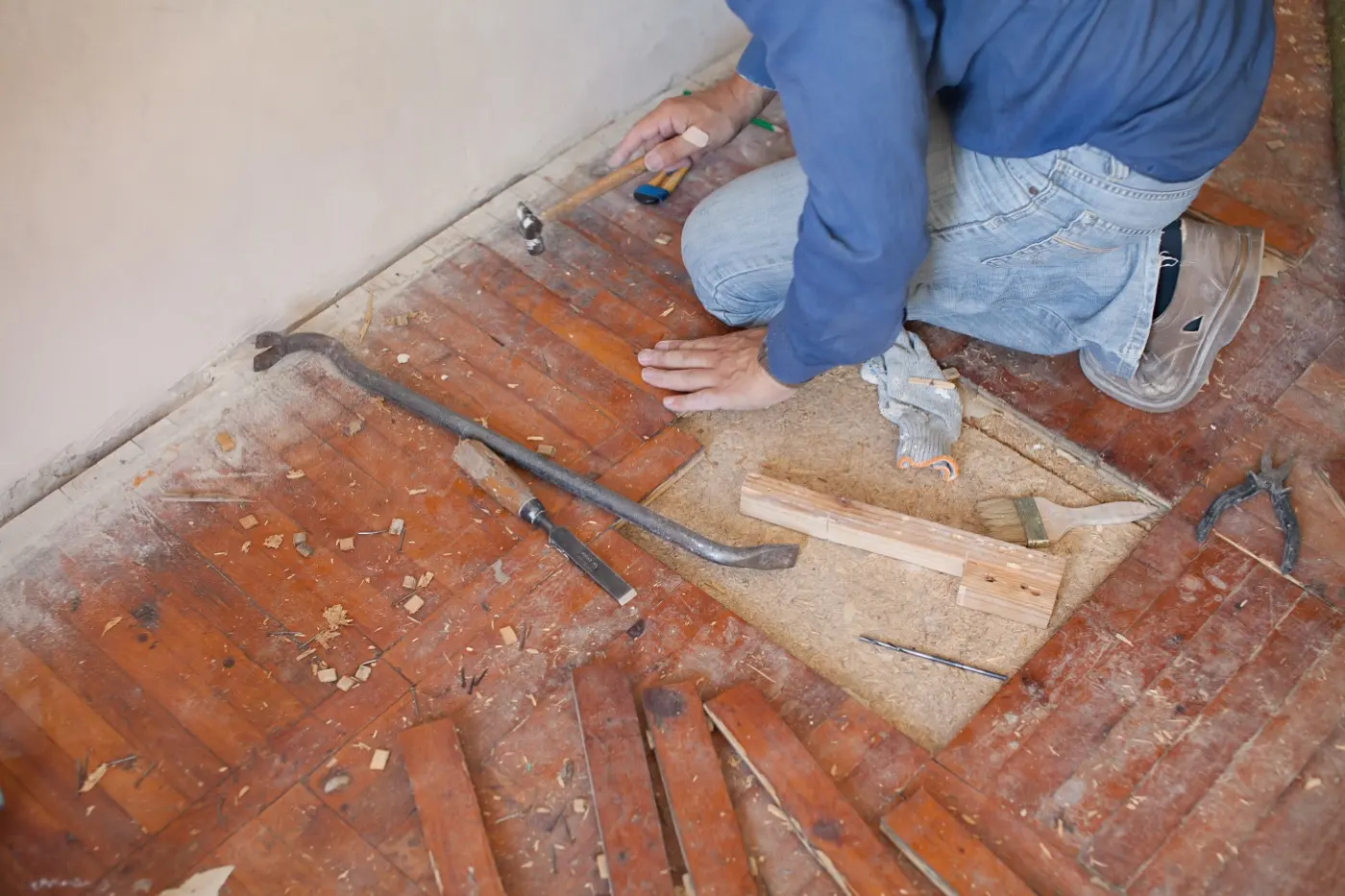
On a pier and beam house, most of the evidence is under the floor. A lot of the older housing stock around here sits on piers: about a quarter of the homes in Tyler were built before 1960, and Kilgore's oil-boom houses run older still, over a third of them. From inside you'll feel floors that bounce, dip between rooms or run downhill toward an outside wall. From the crawl space you'll see piers that lean or sit lower than their neighbors, wood shims crushed flat or dark with rot, a gap between a pier and the beam above it, and damp soil. Push a screwdriver into the beams near the low spot; sound wood fights back. If you crawl in, wear gloves and a mask, cut power to any wiring near the hatch, and watch for snakes, spiders and standing water. A tight or flooded crawl space is one to leave alone. On these houses, sagging and bouncy floors usually trace back to rotted sills, crushed shims or a sunken pier.
Settlement and heave leave different clues
Most people assume a foundation problem means something sank. On clay that's half the picture. Settlement is part of the house going down, usually an edge or a corner where the soil dried, shrank or washed out. Heave is the opposite: clay that got wet swells and lifts the slab, often in the middle of the house, and very often around a leak.
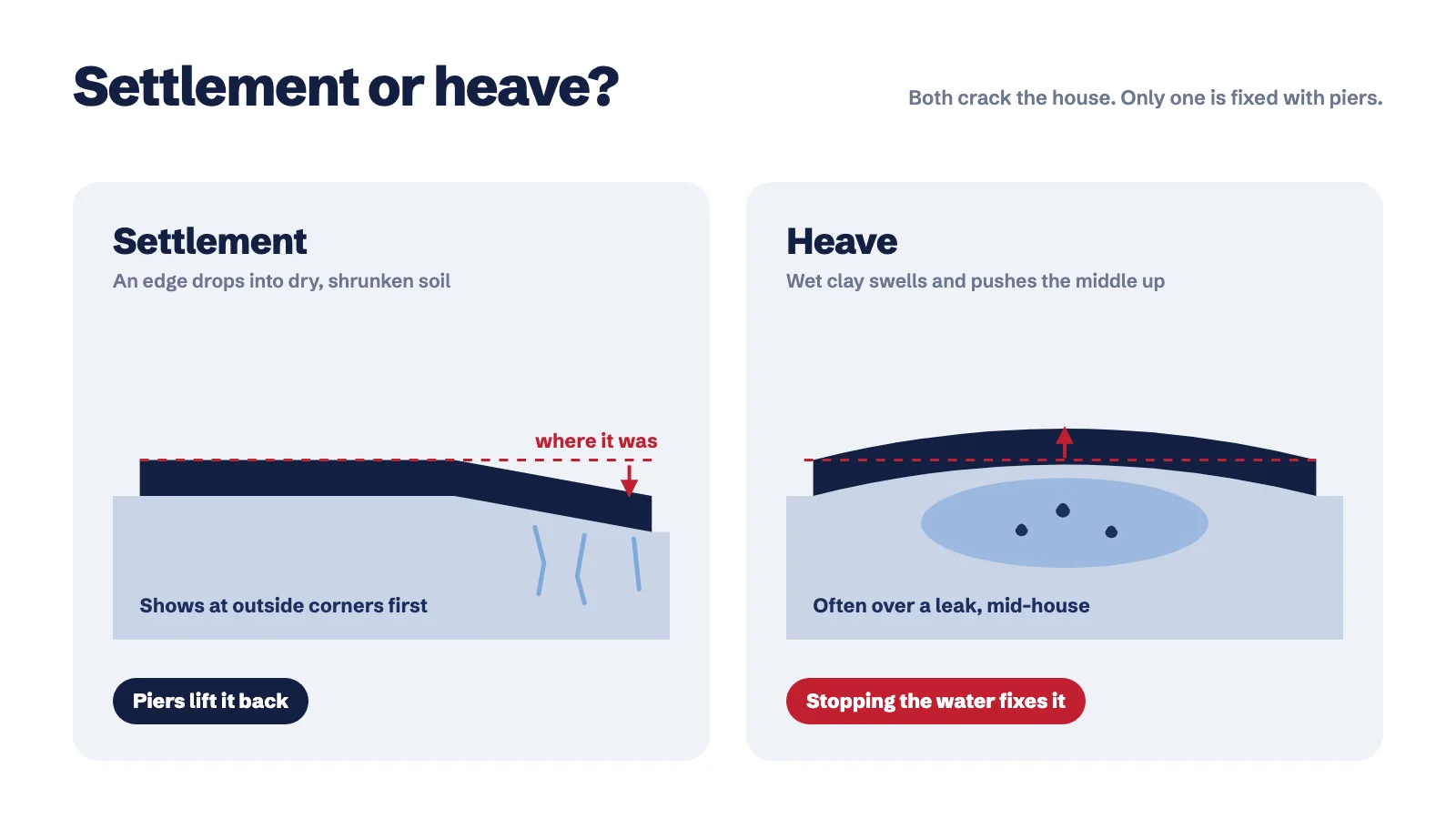
Settlement shows at the outside. Brick cracks at the corners, doors on the outside walls bind, and the floor runs downhill toward the edge.
Heave shows inside: a hump you can feel through your socks in the hallway, cracks in interior walls, doors in the middle of the house sticking, sometimes a water bill that has crept up for months. Getting this wrong is expensive. Piers lift a house that dropped. Put them under a slab that's being pushed up and you've paid for steel or concrete that does nothing about the water underneath. Floor readings and a plumbing test are what separate the two for certain.
Signs that fool people, in both directions
Engineers who evaluate foundations sort what they find into two piles. Cosmetic distress is cracks and separations. Functional distress is what stops the house working: doors and windows that stick, won't close or open on their own, a floor slope you notice when you walk, a countertop that tilts, an offset you could trip on. The guideline most Texas engineers use also points out that a crack shows up early. A separation of about 0.02 inch is noticeable in drywall, and about 0.04 inch in brick or concrete. Both are hairlines. Plenty of visible cracks are a long way from a structural problem, and the same guideline says outright that not every crack comes from the foundation.
These usually aren't the foundation:
- A crack along the drywall seam at a rounded corner, where tape over the corner bead is weak by design.
- Nail pops in a straight row along a ceiling joist.
- One door that sticks in a humid July and frees up by October, with no crack anywhere near it.
- A slope you've lived with for twenty years that hasn't changed. Many slabs were poured a little out of level, so built-in slope and how much floor slope is too much are two separate questions.
The opposite mistake costs more. Older houses in particular hide movement behind years of caulk, paint, moved strike plates and cardboard under the cabinets. Don't take "it's just settling" from anyone who hasn't looked at the whole house.
If the house is under about ten years old, check your paperwork before calling a repair company. Texas dropped its state new-home warranty program in 2009, so any structural coverage comes from the builder contract or a third-party warranty, and the builder should hear about it first.
Make a record before anyone comes out
Spend twenty minutes on this. It costs nothing, it tells you whether things are changing, and it lets you check what any inspector or salesperson tells you.
- Mark the ends of every crack
Draw a short pencil line across each tip and write the date beside it. When a crack grows past the line, you'll know, and you'll know roughly when.
- Photograph each sign with something for scale
A coin or a tape measure in the shot, from the same spot each time, every month or two.
- Set a marble down in each room
One room where it runs hard toward a wall matters more than a gentle drift through the whole house.
- Test every door
Note which rub, which won't latch and which swing on their own. Check them again in a month.
- Walk the outside looking for water
Downspouts, the slope of the beds, sprinklers, trees close to the wall. On a pier and beam house, open the crawl-space hatch too.
- Pull up the last year of water bills
A climb with no reason behind it can be a leak under the slab. Call a leak detection company for that, not a plumber with a drain camera and not a foundation company.
Urgent, soon, or watch and wait
Very few foundation signs are emergencies. For a lot of houses the right move is to fix the water, keep the record going and look again in six months, and nobody selling piers is likely to tell you that.
Call this month
Anything changing in weeks rather than seasons. Several doors in one area that went bad at once. Brick where one side of a crack has pushed out past the other. A floor that feels soft or gives under you. A new hump in a slab floor alongside a higher water bill. Any of these deserve a proper foundation inspection before the next dry spell, not after it.
Have it looked at when you can
Three or more signs in the same part of the house, cracks passing your marks over a few months, floors that feel different from last year. These rarely turn dangerous quickly. They do get dearer to put right while the cause keeps working.
Keep watching
A single hairline crack. One sticky door in summer. A popped seam at a rounded corner. A slope that hasn't changed in years. Keep marking and dating, and fix any obvious water problem.
Know who you're inviting in, too. A free inspection from a repair company is a sales visit, and the person doing it is usually paid on what they sell. Many are honest about a house that doesn't need work. If you want an opinion from someone with nothing to sell, a licensed engineer can't be paid on commission, which makes hiring a structural engineer the better first call in some cases.
Start with the sign that bothers you most
For a crack, reading width, taper and offset one at a time tells you most of what matters. A floor that dips or runs downhill needs readings, which will get you further than another search.
When the signs are clustered and changing, stop reading and call (903) 522-4592. Tell us which doors, which cracks and roughly when they started. We'll set up a visit with a local specialist who takes floor readings and tells you what has moved and what can wait. Keep your notes and photos handy for the visit.
 Prefer our guides in Google results
Sabine Valley Foundation Repair is paid by the independent foundation specialists it introduces homeowners to. That never changes the advice we give. How we're paid