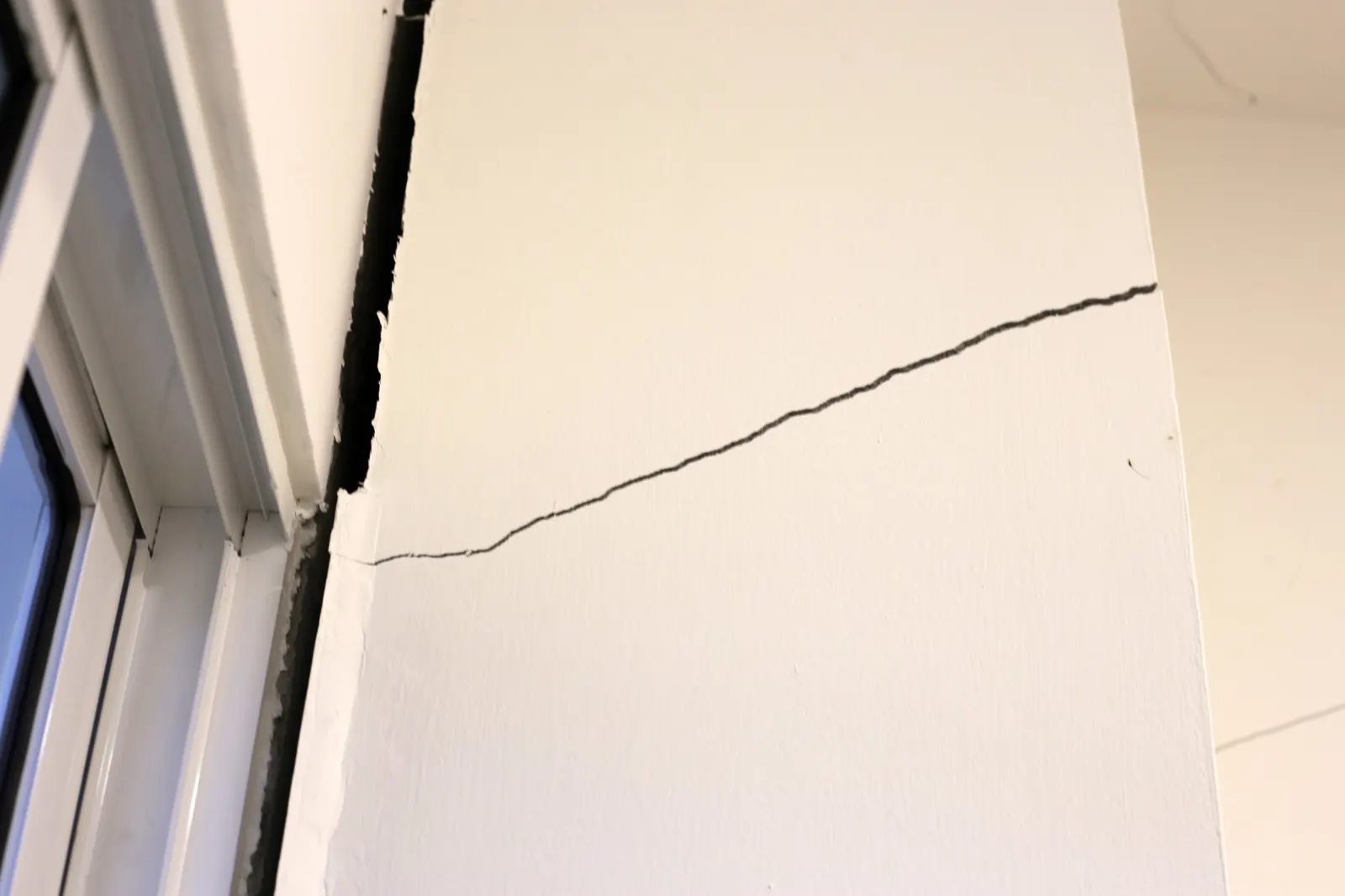
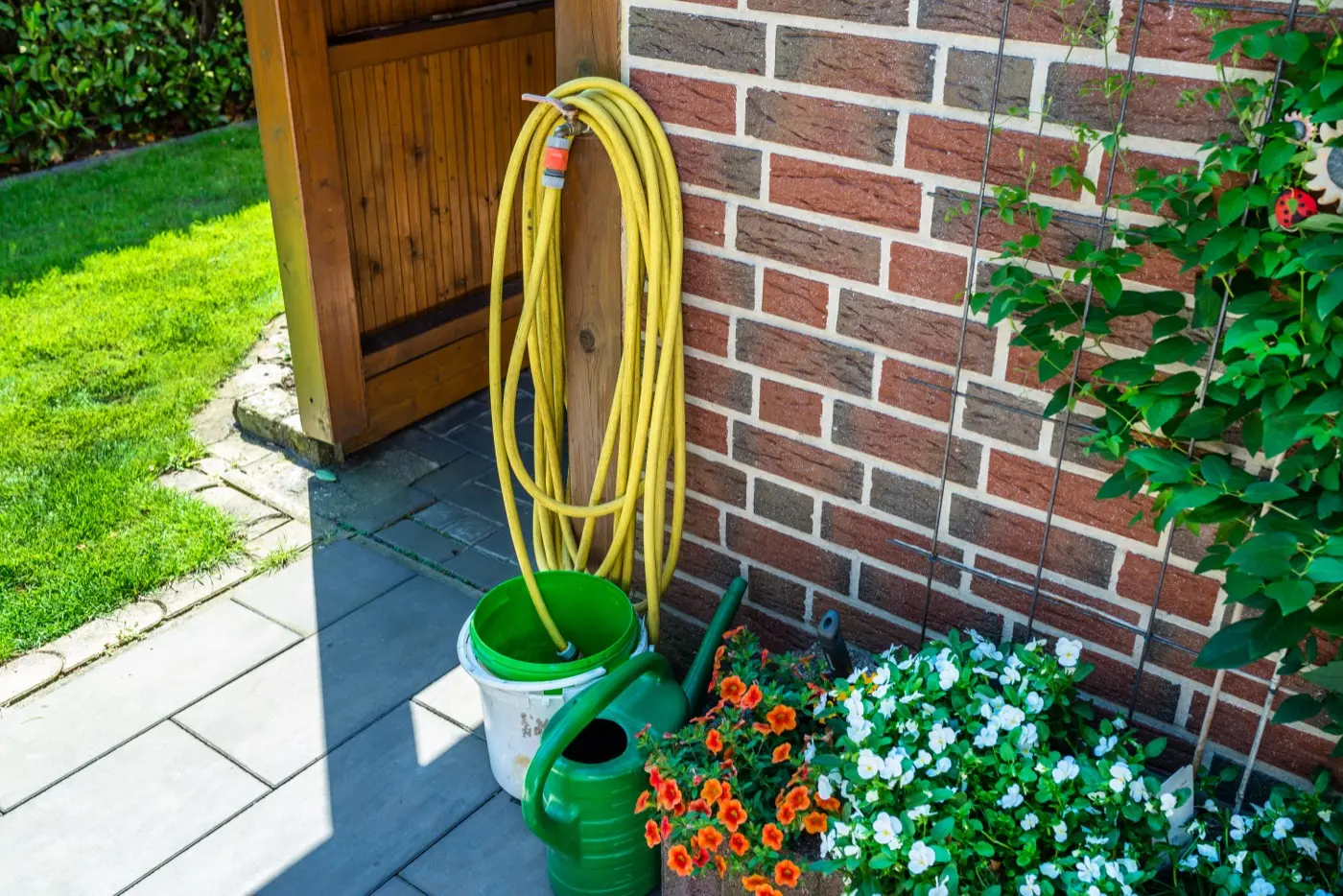
The gap at the slab edge tells you when to start
It's usually late July when people notice. The bed along the back of the house has cracked into plates, and there's a dark line where the dirt has pulled back from the concrete, wide enough to drop a pencil into. Within a week the hall bathroom door won't latch.
That gap is the clay telling you it has given up water. The soil under the middle of the house is shaded and stays fairly steady. Out at the edge, the strip of soil gets the sun, the wind and the reflected heat off the brick, so it dries and shrinks first, and the outside of the slab settles a hair against the middle. In July both Tyler and Longview average only about 2 inches of rain while highs sit in the mid 90s. In a summer like 2011, with 81 days at 100°F or more in Tyler, the drying went much deeper than that.
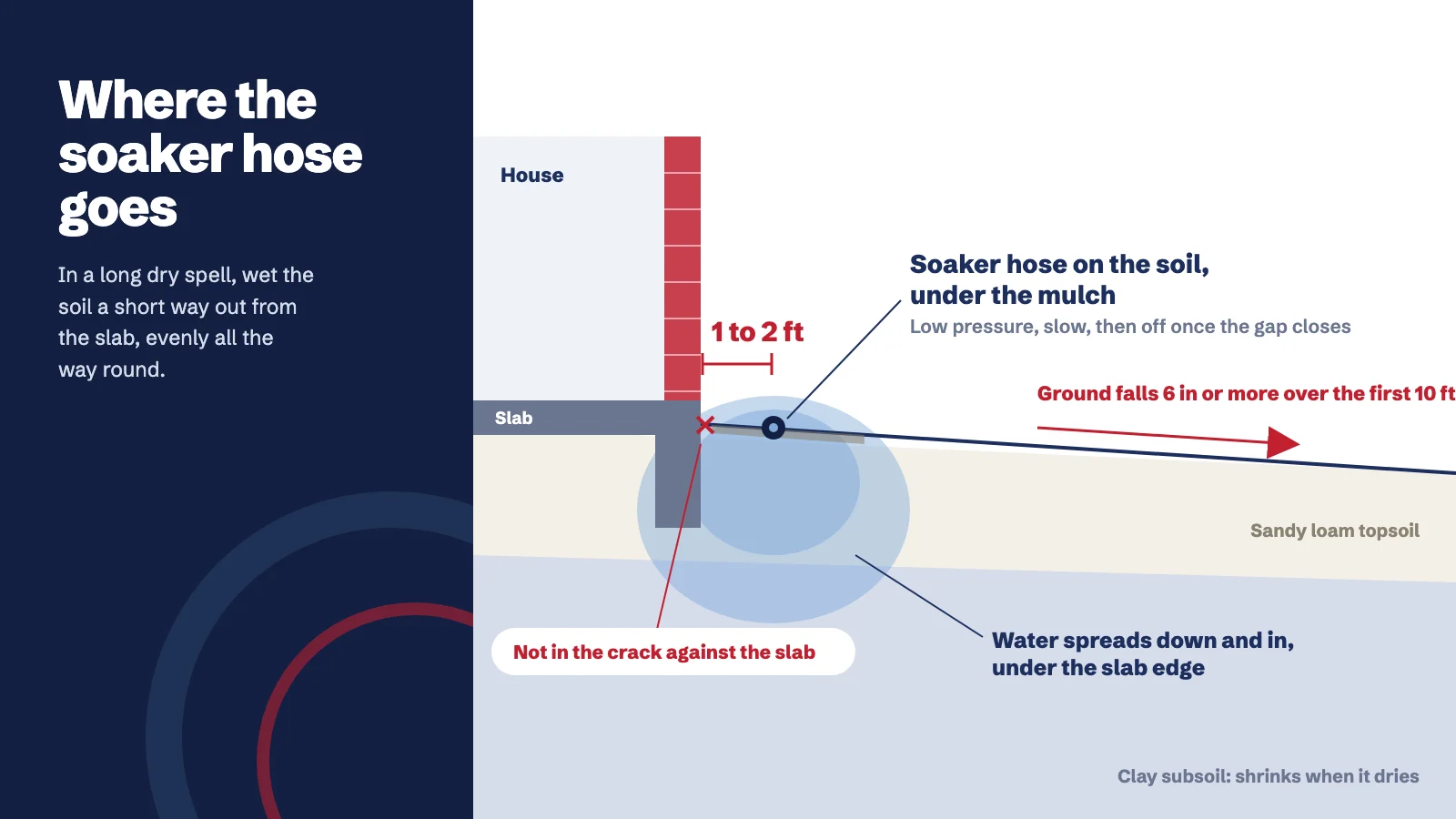
Two things not to do. Don't shovel dirt into the gap. Loose fill stuffed in there doesn't rewet the clay underneath, and once rain returns, the fill and the old clay both swell against the slab. And don't aim a hose into the crack itself, since the water runs straight down the face of the concrete instead of soaking into the soil that's shrunk.
Hold off on patching drywall, too. Cracks that opened as the edge dried often close partway once the soil gets its water back, and paint and mud done in August may crack again in October.
Some contractors say watering does nothing, and they're partly right
Ask around and you'll hear both answers. Some repair company owners say there's no hard evidence that watering a foundation helps and that uneven watering does more harm than good, and a Texas engineering firm has called it more psychological than structural. Others swear by a soaker hose every summer.
Both camps agree on more than it sounds. Nobody argues that dry clay doesn't shrink or that wet clay doesn't swell. Where they split is on how people go about it. A hose run hard on one side, left on a timer into October or laid on a sandy lot does damage or nothing. A slow, even loop on a clay lot, run only while the ground is pulling back, keeps the edge closer to the middle, and that's all a slab on clay asks for.
So start with the soil. Most upland lots here are sandy loam over a moderate clay, and watering can help them. On a deep sandy ridge it does little, because sand barely moves and the water drains straight through. Which soil your lot sits on takes a few minutes to look up.
Dry out the wet corner before you wet the dry ones
Before buying any hose, walk the house in a hard rain with an umbrella. Most houses here have a water problem somewhere on the lot, and a soaker hose added to a house with one soggy corner just makes the difference between corners bigger.
Look for downspouts that empty against the brick, a roof valley pouring into one bed, a low spot still holding water the next afternoon, an AC condensate line dripping at the slab. Check how the beds slope. The code Tyler builds to wants the ground to fall at least 6 inches in the first 10 feet away from the house, and flower beds built up over twenty years often slope back toward the wall instead.
Sort those out first. A downspout extension is an afternoon's job. Regrading a side yard or putting in a French drain is bigger foundation drainage work, and not every house needs it.
Lay one even loop, a foot or two off the slab
The setup takes a Saturday morning. What matters is where the line sits and that it goes the whole way round.
- Measure around the house. Buy enough soaker hose or drip line to circle it, with a little extra. A soaker hose weeps unevenly on long runs, so a long house is better on two or three shorter loops fed from separate faucets, or on drip tubing with pressure-compensating emitters.
- Lay the line on the soil about 1 to 2 feet out from the slab edge. Published guidance runs from about 8 inches to 2 feet, and a foot or so is a sensible middle. Water put down even 3 feet out still moves in toward the slab and down into the deeper soil.
- Run it along every side, behind the shrubs and under the porch steps where you can reach. A gap in the loop leaves a dry patch, and dry patches next to wet ones are what bend a slab.
- Cover the line with mulch or a thin layer of soil to keep the sun off it.
- Put a hose timer on each faucet, plus a pressure regulator if the hose calls for one. You want a slow seep you can barely hear, not a spray.
One trap catches a lot of tidy yards. Rock beds along the house are often laid over black plastic, and plastic stops water from reaching the soil at all. Woven weed-barrier fabric lets it through. If the bed on one side has plastic under it and the others don't, that side has been drier than the rest for years.
Judge it by the soil a foot out, not by the timer
No single number of minutes is right, because hoses, water pressure and soils differ. Start short and watch the ground. University extension advice says the same thing in other words: water slowly, with rest periods of several hours between runs so it soaks deep, and keep it even around the building.
A routine that works for many homeowners in a dry spell:
- Run the hose early in the morning or in the evening, when less is lost to the heat.
- Start with short runs spaced well apart, and let the soil tell you when it needs more.
- The next morning, push a long screwdriver into the ground about a foot from the slab. It should go in with steady pressure and come out damp, not muddy. If it won't go in, add time. If it comes out sticky and wet, cut back.
- Once in the first week, call 811 so you know where buried lines run, then dig a spade's depth beside the line after a run and look at how far down the dark, damp soil reaches. Sideways spread at the surface tells you little. Depth is what counts.
- Check the gap along the slab each day. Once the soil has closed back against the concrete, you've done enough. Hold it there.
Turn it off when the fall rains come back and leave it off through winter and spring. A timer left running all year is the most common way people drift into overwatering.
Right after foundation work, the yard plays by different rules for a while. Dug-up beds and fresh backfill drain faster than undisturbed ground, so plants along the house need more water than before, and new sod wants water every day until it roots. Keep that water on the plants, not pooled against the slab. Backfill height and sod are on the checklist after a foundation repair too.
Overwatering lifts a slab, and it looks the same from inside
Clay doesn't care where the water came from. Keep it wetter than its normal range and it swells, and swelling clay can push part of a slab up. That's heave. It cracks drywall and sticks doors just as settling does, and it's harder to fix, because piers can hold a house up but can't stop the ground pushing.
The usual way it happens is a perimeter hose left on through a wet spring, or a drip system in the beds on one side that runs daily while the other sides get nothing. Watch for:
- Soil beside the slab that's still muddy or puddled a day after watering.
- Moss or mildew in the beds along the house.
- A door that eased when you started watering and is now sticking on the opposite corner.
- A water bill well above the same month last year with no good reason.
Sometimes a jump in the bill means a leak under the slab, wetting one spot day and night. If the bill jumps and you haven't changed anything, call a leak detection company before you change the watering. A plumber's camera finds clogs, not pinhole leaks under concrete. And if you're not sure whether the cracks you're seeing are seasonal or something more, the guide to signs of foundation problems sorts the ones that matter from the ones that don't.
Sprinkler heads aimed at the brick do more harm than a dry summer
A lawn system isn't a foundation watering system. The heads nearest the house often throw water straight onto the wall, and that hurts twice. One strip of soil gets far more water than the other sides of the house. And water sprayed on brick or stone veneer soaks through the mortar and weep holes into the sheathing and framing behind it, which is how a wall rots from the inside.
Walk the system while it runs. Turn or swap any head that hits the wall, and cap or move heads sitting in the bed right against the slab. Lift the lid on the valve box too. A valve that weeps a little all the time puts water in the same spot every day of the year.
Beds along the house do better on drip laid on the soil than on spray heads. Remember that drip in the beds counts as foundation watering for those sides, and set the loop on the other sides to match. A big tree on one side throws the balance the other way, which the guide to trees and foundations deals with.
Pier and beam houses want the crawl space dry instead
A pier and beam house sits on separate piers with air under the floor, and its trouble usually starts with too much water, not too little. Soft soil under the piers, damp sills and beams, floors that go bouncy. A hose around the outside rarely helps, and water that works its way underneath does real harm.
For these houses the job flips. Keep roof water and surface water out from under the house, keep the vents clear of dirt and shrubs, and look under with a flashlight after a big rain. Wear gloves and a mask, switch off power to any wiring near the access, and watch for snakes, spiders and standing water. Stay out if it's tight or flooded. If the perimeter piers seem to be dropping in a drought, get someone to take readings before you add water; the answer may be shims or new pier and beam supports.
Give it one season, then measure
If you've closed the gap, fixed the wet corner and kept the loop even through a summer, and the same doors still stick, watering isn't the whole answer. Something else is moving that house.
That's when readings earn their keep. Call (903) 522-4592 and tell us what you've tried. A local specialist can come out to level the floors, check the yard and the plumbing, and tell you which corner is doing what.
 Prefer our guides in Google results
Sabine Valley Foundation Repair is paid by the independent foundation specialists it introduces homeowners to. That never changes the advice we give. How we're paid